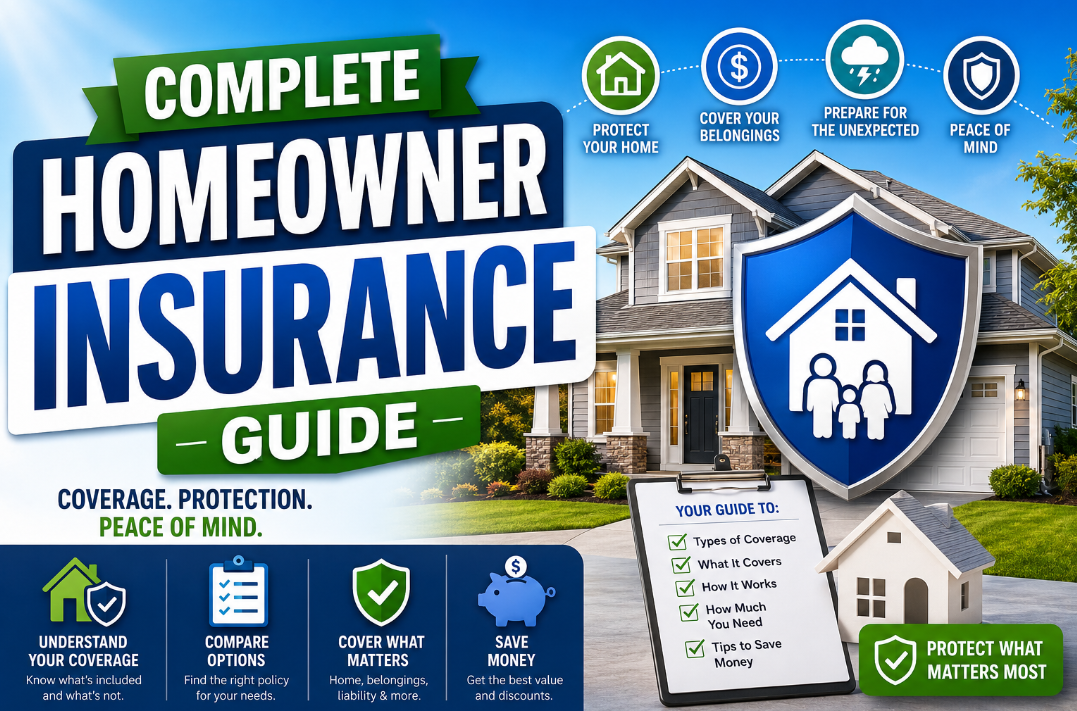
Mortgage Lenders Require Homeowners Insurance
Homeowners insurance provides financial protection against damage to a residence and its contents, and personal liability protection against accidents that take place on their property.
Most homeowner policies provide coverage at replacement cost (minus depreciation) of dwellings, garages and gazebos, plus sometimes other structures like gazebos or garages as well. Some policies offer coverage against additional rebuilding costs related to adherence with changing building codes or laws, with special endorsements such as Ordinance/Law coverage for these additional costs.
Coverage
Homeowners insurance provides financial protection against damage or loss to both a home and its contents, as well as liability coverage for injuries on the property. Mortgage lenders typically require homeowner insurance as part of the loan agreement process, but it’s wise for anyone who owns property to have coverage.
Home insurance policies vary based on their type and limits; most policies offer options to protect against various perils, with the HO-3 policy often providing basic protection. Mortgage lenders require this form of coverage which generally protects structures as well as certain items within them from all causes other than those specified in their policy, in addition to providing standard fire and water coverage.
There are other forms of homeowners insurance as well. These include the more limited HO-1 policy and its availability in limited markets, and HO-8 coverage designed specifically for older homes. Specialty policies may offer tailored protection for unique situations or items.
Dwelling coverage of your home insurance provides for repairs or rebuilds of the structure if it’s damaged by an insured event, typically including walls, floors and roof as well as any permanent fixtures like appliances and cabinets. Other structures coverage provides insurance against non-attached structures like fences sheds and gazebos on your property that might incur damages that aren’t excluded specifically, although there may be a deductible payable.
Additional living expenses coverage, also referred to as loss of use insurance, is an essential feature of most homeowner policies that covers additional living costs incurred while your house is being repaired after an insured disaster. It typically accounts for 20-25% of your dwelling coverage limit; some insurers offer extended or guaranteed replacement cost policies that pay more of that percentage if rebuilding becomes necessary.
Liability
Liability coverage included in a standard homeowners policy is intended to safeguard you against financial losses that result from accidents on your property, such as medical costs for guests who are injured at your home and costs associated with repairing or replacing their belongings. Furthermore, this portion covers legal fees should someone sue you due to damages occurring as a result of an incident on your property. While individual amounts vary greatly, enough should be available in your policy so as to safeguard your net worth.
Standard homeowners policies offer more than dwelling and personal property coverage; for instance, loss of use coverage provides funds to cover temporary rental fees while your house is being repaired; optional additional structures coverage provides coverage for garages, sheds and gazebos as well as personal property coverage (with specified limits and subtraction of your deductible).
Flood and earthquake coverage typically can be added as endorsements or separate policies, and your standard homeowners policy might not cover the costs associated with updating to current building codes, either; special coverage for this situation may also be available as an endorsement or separate policy.
The average cost of homeowners insurance policies depends on many factors, including where you live, its value and whether or not steps have been taken to lower risk of disaster. An HO-3 policy is the most frequently purchased one that provides both dwelling and personal property coverage as well as personal liability protection – though other policies such as HO-1 provide only limited scope while HO-8 offers specific protection designed for older homes; but, overall, an HO-3 provides comprehensive protection.
Exclusions
Homeowners insurance provides essential protection from risks like fire, theft and certain types of water damage; however, it doesn’t cover everything; insurers usually include coverage exclusions to make policyholders understand the limits of their protection and may include damages caused by natural disasters (like flooding or earthquakes ) as well as wear and tear caused by neglect or lack of maintenance.
Other structures coverage insures non-attached outdoor buildings on your property, like fences and gazebos, up to their limits (minus your deductible) without incurring additional costs for replacement or repair costs. Unfortunately, however, this coverage won’t cover any buildings you use for business activities like detached garages or workshops; for those instances you’ll need commercial property insurance or an endorsement specifically covering that purpose.
Earth movement is another common home insurance exclusion, covering damage caused by earthquakes, land shockwaves and tremors before and after volcanic eruptions, landslides, mudslides, sinkholes or any shifting or sinking of ground surfaces. This also excludes damage resulting in collapsed structures or covered foundations; however if an earthquake cracks your foundation allowing in water or debris it may be possible to file a claim for these losses.
Pest infestations are typically excluded as well, since most insurers view them as preventable with regular maintenance. For instance, termite damage is not covered, but you can mitigate its damage by regularly checking for signs of termites in your house and taking immediate steps to address them. Failing to do this could constitute negligence in their eyes.
Damage caused by dog bites is also specifically excluded as well as losses arising from war, terrorism or nuclear hazards – these risks are considered too extreme to cover through standard policies.
Homeowners insurance policies vary significantly in what they cover, so it is wise to carefully examine your policy documents and consult an agent about any questions or concerns that arise. An endorsement or separate policy may provide coverage against certain risks; however, you should recognize that some coverage gaps cannot always be avoided.
Quotes
Cost of homeowners insurance policies varies based on various factors, including location, age, size and construction of your home; its security features; your selected deductible amount and claims history. These factors could impact premium amounts.
Liberty Mutual makes it easy to obtain a quote online and tailor coverage specifically to your property, belongings, liability concerns and additional living expenses. Our innovative discounts, local agent support and peace-of-mind come together for peace-of-mind protection for both home and finances.
Liberty Mutual Home Insurance Policies are written and administered by Liberty Mutual Insurance Company, which was awarded an A+ (Superior) rating by AM Best. Our comprehensive policies offer high coverage limits at competitive prices that make us a favorite choice of many households nationwide.